


28
26-09
No break for the Mid-Autumn Festival—dedication to excellence, reaching far.
No break for the Mid-Autumn Festival—dedication to excellence, reaching far.
A攻坚 meeting for the highway “Water-Saving Rest Stop” project
As the Mid-Autumn moon rises, for most people, the holiday begins with a family reunion dinner.
At our company, this holiday took on a different twist: the Technology, Sales, Production, Procurement, and Installation departments all gathered around the same table to focus on one thing—water‑saving stations at highway service areas.
This is no routine meeting. Document No. 1168 of the Ministry of Transport clearly stipulates that, in pilot service areas, the installation rate of primary‑level water meters must reach 100%, the installation rate of secondary‑level water meters must reach 95%, the pipeline leakage rate must not exceed 2%, and per‑vehicle‑trip water consumption must be kept below 30 liters—each stringent target underpins a rainwater‑recovery system that must be put into practice. The market is already in place; what we need to do is deliver these systems.

Technology is our strongest asset in the water‑conservation race.
01 Why “Water-Saving Station”?
The “Notice on Launching a Pilot Program for Building ‘Water-Saving Stations’ at Highway Service Areas,” jointly issued by the General Offices of the Ministry of Transport and the Ministry of Water Resources, outlines the construction requirements across four areas: water-saving infrastructure, the utilization of non-conventional water sources, refined water-use management, and water-conservation publicity and education. Among these, two points are directly relevant to our capabilities:
First is the utilization of non-conventional water. Rainwater harvesting and storage facilities should be constructed, and non‑potable uses such as car washing, toilet flushing, landscaping, and landscape irrigation should rely on non‑conventional water sources. For service areas where wastewater cannot be discharged into the municipal sewer system, wastewater treatment facilities must be built, with efforts made to achieve reclaimed water reuse.
Second, implement refined water management. Install metering devices at key water‑use points, achieving 100% installation of primary‑level meters and 95% installation of secondary‑level meters; conduct regular water‑balance assessments to keep pipeline leakage below 2%; and encourage the development of a real-time water‑use monitoring platform.
Taken together, these two factors point not to a single product, but to a rainwater collection and reuse system equipped with metering and monitoring capabilities—precisely our core battleground.
Policy sets the direction, standards define the threshold, and the market determines the outcome. Acceptance testing is not about verifying our equipment; it is about validating the water‑use data of the service area. Therefore, our system must simultaneously meet three requirements: reliable data collection, thorough filtration, and accurate metering.

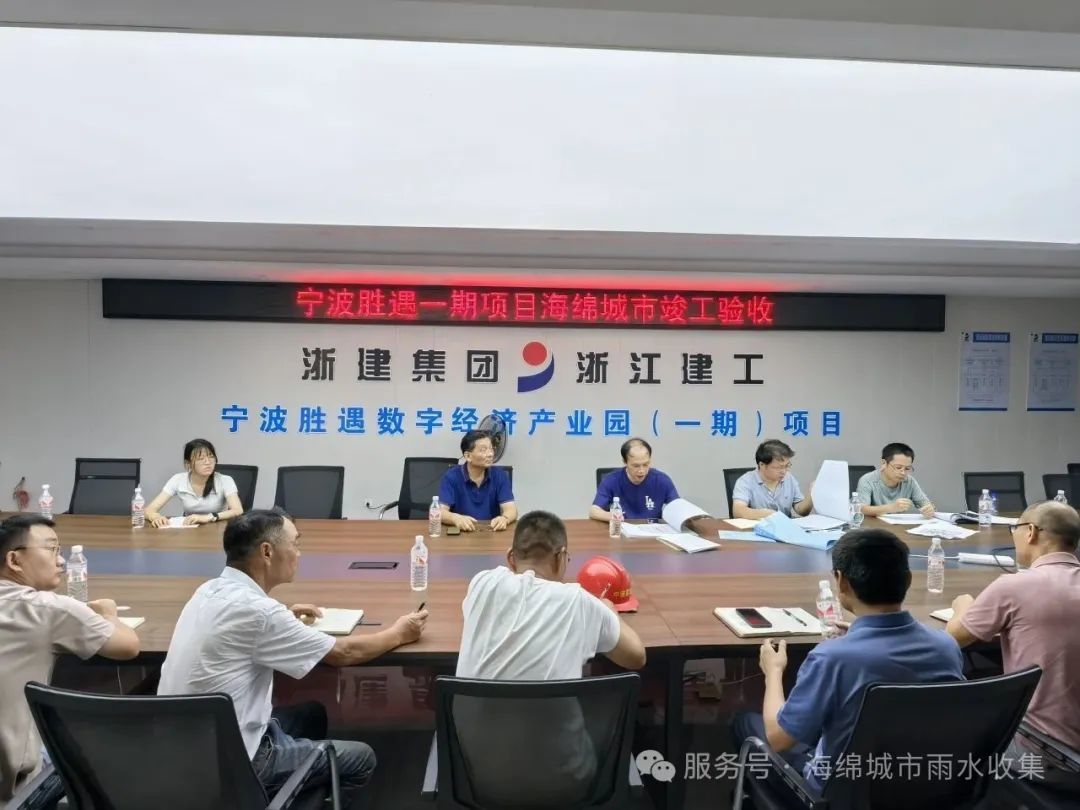
Brainstorming and offering suggestions across all departments.
02 Five departments, all sitting at the same table
This meeting did not follow the standard procedure; instead, it arranged the five departments in a linear sequence along the end-to-end value chain, from “from requirements to delivery”:
Business Division—translating policies into actionable requirements. We systematically review pilot project applications and identify opportunities in each province, pinpointing the markets where we can gain a first-mover advantage. With policy documents held by provincial authorities and projects managed by clients, whoever secures frontline intelligence first secures the ticket to enter.
Technical Department — translating requirements into measurable parameters. Focusing on rainwater harvesting, storage and regulation, precision filtration, disinfection, pressurized reuse, and water‑use metering and monitoring, the team refines system solutions tailored to service‑area applications. Each indicator in the policy must be mapped to quantifiable, verifiable parameters within the system.
Production Department—turning designs into deliverable products. We meticulously verify production scheduling, quality, and delivery timelines to ensure that new products can be successfully manufactured and delivered on time.
Procurement Department—proactively secures critical materials and supply chains, ensuring sufficient flexibility for large-scale deliveries and preventing bottlenecks at the final stage.
Installation Department—delivers the product to the site. Construction procedures, acceptance criteria, and handover for operations and maintenance are all thoroughly reviewed, ensuring the system operates reliably and sustainably on the highway over the long term.
Normally, the five departments each handle their own segment, but this time they’ve gathered around the same table for a single purpose: to get the system into the new market as quickly as possible, ensuring that every step of the “Water-Saving Station” is assigned to a responsible person and rigorously overseen.

Five departments sit down together to review a matter from start to finish.
03 The spirit of craftsmanship is hidden in every instance of meticulous attention to detail.
What was most compelling about this meeting was not grand narratives, but the meticulous attention to detail—down to the millimeter and the percentage point.
The technical team is particularly meticulous. How to match the catchment area with the runoff‑collection capacity of a rainwater harvesting system, how to determine the storage volume based on local rainfall patterns, how to balance filtration precision in a compact filtration unit with both consistent effluent quality and manageable maintenance frequency, and how to ensure that reclaimed water consistently meets the requirements for toilet flushing and landscape irrigation—each set of parameters is carefully scrutinized, because the system’s performance ultimately hinges on the quality of the discharged water and the number of days it operates reliably.
The production department takes each process very seriously. The sealing integrity, pressure‑bearing capacity, and electrical control reliability of the integrated equipment and precision filtration units are meticulously verified at every stage, with yield rates for each step rigorously checked. Production schedules have been revised again and again. Only when the equipment passes inspection upon leaving the factory can on‑site installation minimize the need for rework.
The installation team takes interfaces very seriously. From the connection of rainwater pipes to the routing of reuse pipelines, from the placement of metering devices to the integration of electrical control systems with the monitoring platform, every interface is meticulously checked against process specifications and acceptance criteria, leaving no detail that could potentially affect system operation unattended.
The Procurement Department is particularly meticulous about the timeline. The delivery dates for critical components and spare parts are locked in well in advance, because the system’s delivery benchmark is not simply “getting it installed,” but rather “commissioning on schedule and passing acceptance smoothly.”
Market enthusiasm is the keen awareness that seizes every opportunity; artisanal spirit is the patient dedication to executing each opportunity with meticulous care.
This holiday, we didn’t stop—we turned it into a real, hands-on effort to tackle tough challenges.
04 The full moon is there to help us set out anew.
The Mid-Autumn moon has never been a reason for travelers to halt; rather, it is the beacon that helps them see their way.
With a clearer product roadmap, a more reliable supply chain, and a rock-solid construction plan in hand, we’re now heading into the arena of the “Water-Saving Station” project at highway service areas.
What the examination site tests is never just a piece of equipment. It assesses whether rainwater is actually collected, whether the filtered water can be reliably reused, whether every ton of water is accurately metered, and whether leaks are effectively controlled. The answers to these questions will ultimately be documented in the service area’s acceptance report.
We believe that by taking rainwater management to the utmost, we can contribute our modest part to the nation’s water‑conservation efforts and to the countless travelers who journey north and south along every highway.
This Mid-Autumn Festival, Sponge City Rainwater Harvesting and Utilization Technology Co., Ltd. extends its heartfelt gratitude to every colleague who has remained steadfast at their post. Thanks to you, the market is truly worth looking forward to, and our commitment to excellence resonates with conviction.
Sponge City Rainwater Collection and Utilization Technology Co., Ltd.
September 27, 2026
Related News
Related News
2026/09/28

No Break During the Mid-Autumn Festival—Craftsmanship for Lasting Excellence A decisive meeting on establishing “Water-Saving Stations” along the expressway. As the Mid-Autumn moon rises, for most people, the holiday begins with a family reunion dinner.

15th Floor, Longteng Building 416 Tianda Lane Southern Business District Yinzhou District Ningbo City Zhejiang Province